What an Effective Mailroom Process Actually Looks Like
A well-managed mailroom does not feel chaotic, even at high volume. It operates with a level of predictability that removes uncertainty from the process.
That predictability comes from having a clearly defined workflow, supported by systems that ensure it is followed consistently.
Every parcel follows the same path. It is received, recorded, stored, and handed over in a controlled way. There is no reliance on memory, no variation depending on who is on shift, and no ambiguity about where an item should be at any given time.
This is the foundation of a modern mailroom management process, and it is what separates controlled environments from reactive ones.
Why Most Mailroom Processes Break Down
In practice, many organisations operate with processes that are only partially defined.
There may be an expectation that parcels are logged, but no consistent method for doing so. There may be designated storage areas, but no way of tracking what is placed where. Notifications may be expected, but not enforced.
Under low volume, these gaps are manageable. As volume increases, they become points of failure.
Parcels are signed for but not properly recorded. Items are placed wherever there is space rather than in tracked locations. Collection happens informally, with no confirmation beyond a quick exchange at the desk.
Over time, these small inconsistencies create larger problems. Parcels become harder to locate. Staff rely on asking rather than checking. When something goes missing, there is no clear record to refer to.
This is why organisations move towards mailroom management software. Not to replace the process, but to make it consistent.
Defining a Best Practice Workflow
An effective mailroom process does not need to be complex, but it does need to be complete.
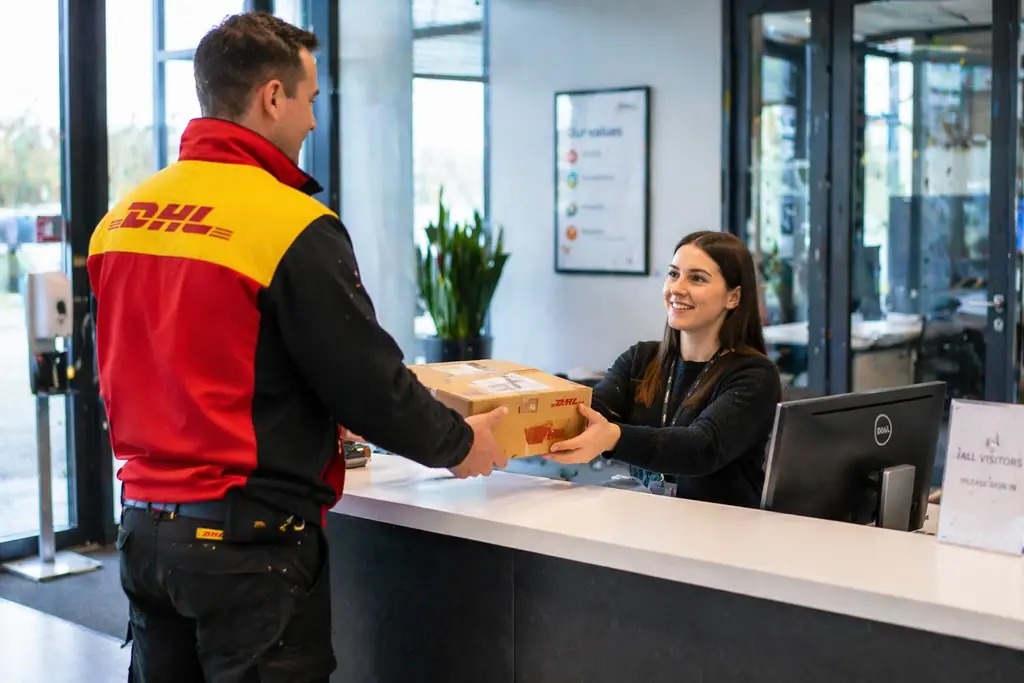
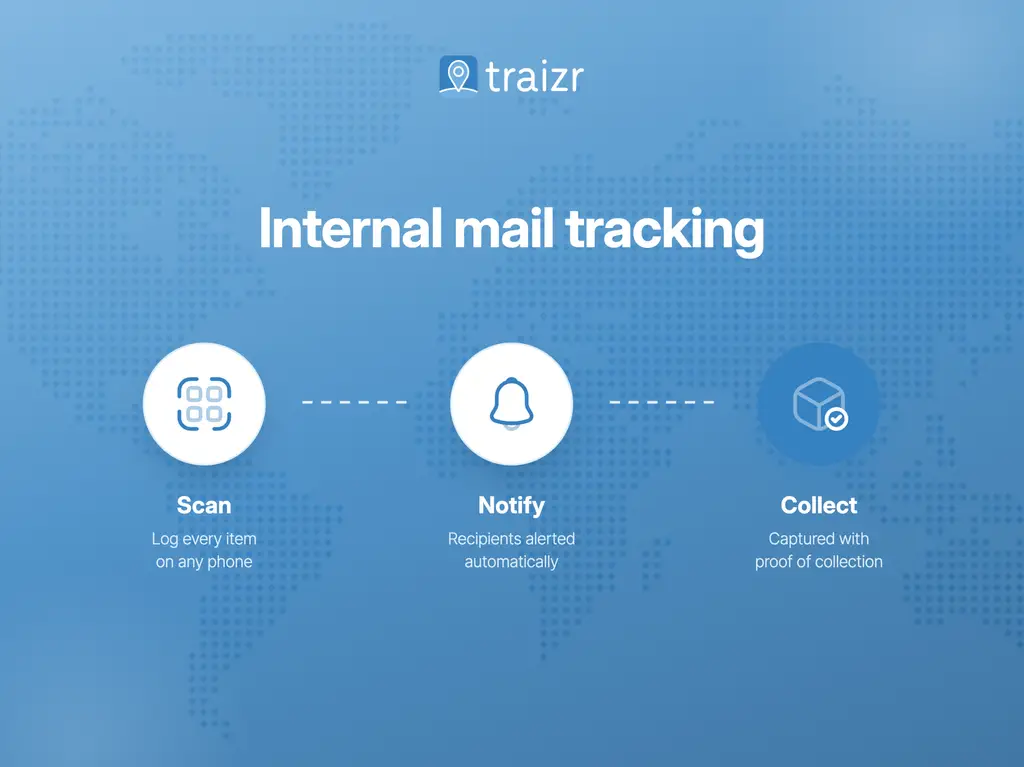
It begins at the point of arrival. Every parcel is recorded immediately, ideally through scanning rather than manual entry. This creates a reliable, timestamped record without slowing down intake.
From there, the parcel is linked to a recipient and placed in a known location. That location is not just a physical space, but part of the system, meaning it can be referenced at any time.
Notification is handled automatically. Recipients do not need to chase for updates because they are informed as soon as their item is processed.
Finally, when the parcel is collected, that handover is recorded. This creates a full audit trail, from arrival to final delivery.
This type of structured workflow is typically supported by a parcel management system, ensuring that each step is followed without relying on manual oversight.
The Difference Between Process and Policy
One of the common mistakes organisations make is confusing policy with process.
A policy might state that all parcels must be logged and tracked. A process ensures that this actually happens in practice.
Without the right tools, even well-defined policies are difficult to enforce. Staff fall back on quicker, informal methods when under pressure, not out of negligence, but because the system does not support the required behaviour.
A structured mailroom management software solution bridges this gap. It aligns the process with the way people actually work, making the correct approach the easiest one to follow.
Scaling Without Losing Control
As organisations grow, mailroom operations become more complex. More deliveries, more recipients, more movement within the building.
Without a scalable process, this growth introduces risk. What worked for ten parcels a day does not work for fifty or a hundred.
A well-designed process scales because it does not rely on individual effort. It relies on consistency. Whether handling ten parcels or two hundred, the same workflow applies.
This is where structured systems make a measurable difference. They absorb the increase in volume without introducing additional complexity.
Why Visibility Is Central to Good Process
At the heart of any effective mailroom process is visibility.
At any point, it should be possible to answer a simple set of questions. What has arrived today. Where is it now. Who is responsible for it. Has it been collected.
If those questions cannot be answered quickly and confidently, the process is incomplete.
Visibility reduces the need for interruption. Staff do not need to ask reception for updates because the information is available. Reception teams are not required to remember or track items manually because the system holds that information.
This is one of the primary benefits of a delivery tracking system for businesses. It makes the state of the process visible at all times.
Moving from Reactive to Controlled Operations
In many organisations, the mailroom operates reactively. Issues are dealt with as they arise, often without enough information to resolve them quickly.
A structured process changes that dynamic. Instead of responding to problems, the system prevents them from occurring in the first place.
Parcels are less likely to be misplaced because their location is always known. Delays in collection are reduced because notifications are automatic. Queries are resolved quickly because there is a clear record of events.
This shift from reactive to controlled operation is where the real value lies.
Building a Mailroom Process That Works
Improving mailroom operations does not require a complete overhaul. It requires a clear process, supported by the right system.
Once every parcel is consistently recorded, tracked, and accounted for, the pressure on the operation reduces significantly. Staff spend less time dealing with issues and more time managing the flow of deliveries.
A well-implemented mailroom management software solution provides the structure needed to achieve this, without adding unnecessary complexity.
See the Difference in Practice
If your current mailroom process relies on manual tracking or informal handling, the limitations will already be clear. As volume increases, those limitations become harder to manage.
A structured system introduces control without slowing the operation down.
Book a demo to see how a modern mailroom process works in practice.