Why Packages Go Missing in the First Place
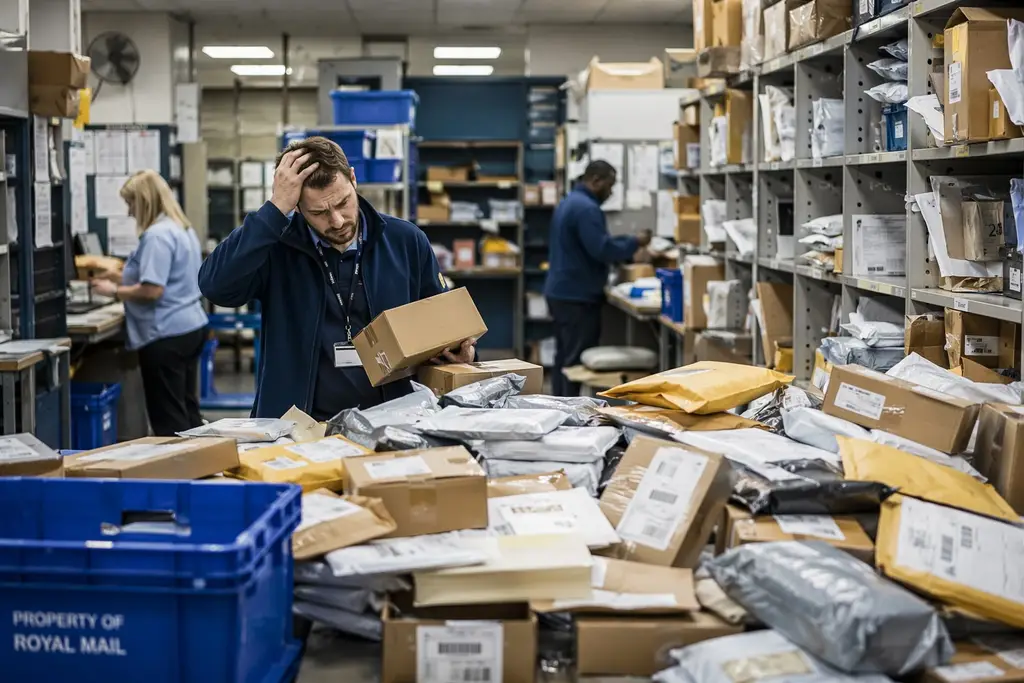
In most organisations, parcels are lost long before anyone realises it. The failure does not happen at the moment something disappears. It happens earlier, when there is no consistent way to track what has arrived and what has happened to it. The scale of the exposure is easy to underestimate: 62% of parcels are still in the mailroom four hours after they arrive, which is a lot of unattributed property sitting in a room.
Deliveries are often signed for quickly to keep couriers moving. Items are placed in temporary locations without being recorded. Logging may happen later, or not at all if the desk is busy. Notifications depend on someone remembering to send an email or make a call.
Each of these steps seems minor in isolation. Together, they create an environment where parcels can move through the building without ever being properly tracked.
Without a reliable record, there is no way to answer basic questions. Was the parcel delivered. Where was it placed. Who handled it last. Once those questions cannot be answered, the item is effectively lost even if it is still somewhere in the building.
This is why organisations begin to adopt parcel tracking systems for businesses when losses become frequent enough to disrupt operations.
The Hidden Cost of “Occasional” Loss
It is easy to underestimate the impact of lost packages because each individual incident seems small. In reality, the cost accumulates quickly.
Time is the first thing lost. Staff stop what they are doing to search for items or follow up with reception. Reception teams spend a disproportionate amount of time answering the same queries. Managers get pulled in when something important cannot be found.
Then there is the direct cost. Replacement orders, expedited shipping, duplicated purchases. These are rarely tracked as a single problem, but they add up.
More importantly, there is the operational impact. When people lose confidence in the system, they create their own workarounds. Parcels are collected informally. Items are stored in personal spaces. Processes become inconsistent. The original problem becomes harder to solve because there is no longer a single, trusted way of working.
In environments where deliveries are sensitive or time critical, the risk is even higher. Without a clear audit trail, there is no way to demonstrate what has happened to an item after it was received.
Why Manual Processes Cannot Prevent Loss
Many organisations attempt to fix the issue by tightening existing processes. They introduce stricter logging, clearer instructions, or additional checks.
The intention is right, but the limitation remains the same. Manual systems rely on people being consistent under pressure.
In a busy reception or mailroom, consistency is the first thing to break. When multiple deliveries arrive at once, the priority is to keep things moving. Logging becomes secondary. Details are missed. Parcels are placed temporarily and not revisited.
Even when logs are maintained, they are often incomplete. A name without a timestamp. A parcel recorded without a location. A signature that cannot be linked back to a specific item. These gaps are enough to make tracking unreliable.
This is where manual processes reach their limit. They can support low volumes, but they cannot provide the level of control needed as complexity increases.
What Actually Stops Parcels Going Missing
The only reliable way to prevent lost packages is to remove ambiguity from the process entirely.
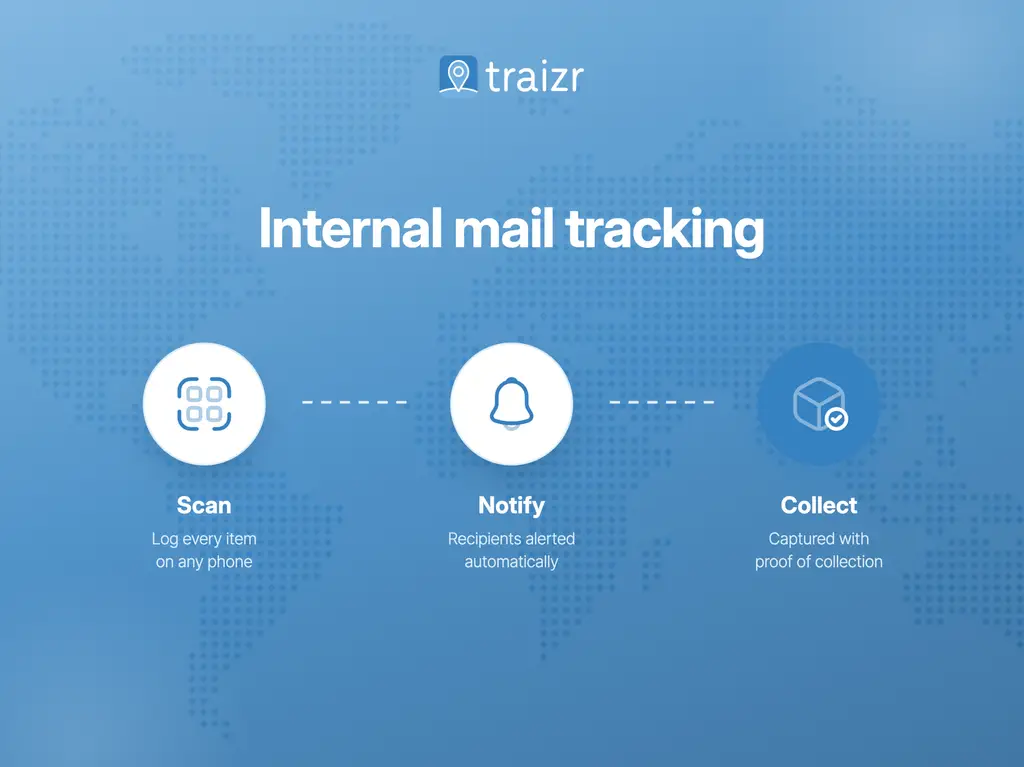
That starts with capturing information at the point of arrival. Every parcel is scanned as it enters the building, creating an immediate and accurate record. This removes the dependency on memory or delayed logging.
From there, the system maintains visibility. The parcel is linked to a recipient. Its location is known. Any movement is recorded. When it is collected, that handover is captured as well.
The result is a complete, continuous record from delivery to collection.
This is the role of proof of delivery software . It does not just confirm that something arrived. It confirms what happened to it afterwards.
How the Workplace Changes Once Tracking Is Introduced
The impact of proper tracking is noticeable almost immediately.
Reception teams are no longer interrupted constantly because staff can check the status of their deliveries without asking. Parcels are processed more quickly because scanning replaces manual entry. Items are stored in known locations instead of being placed wherever there is space.
Most importantly, uncertainty disappears. If a parcel is queried, there is a clear record to refer to. It becomes obvious whether it has been delivered, where it is, and whether it has been collected.
This shift is why organisations implement a delivery tracking system even when parcel volume is moderate. The benefit is not just efficiency, it is clarity.
From Reactive to Controlled
Without a structured system, parcel management is reactive. Issues are dealt with after they occur, often without enough information to resolve them quickly.
With proper tracking in place, the process becomes controlled. Parcels are accounted for at every stage. Problems are prevented rather than investigated.
This is a fundamental change. Instead of relying on individuals to remember and follow process under pressure, the system ensures that the process is followed consistently.
That consistency is what eliminates loss.
Putting an End to Lost Packages
If parcels are going missing in your workplace, the underlying cause is already there. It will not resolve itself, and it will not improve with volume.
The solution is not stricter instructions or more careful handling. It is a system that provides visibility from the moment a parcel arrives to the moment it is collected.
A dedicated internal delivery tracking solution removes the gaps where loss occurs and replaces them with a clear, auditable process.
Request a demo to see how lost packages are eliminated when tracking is handled properly.