The Visibility Gap Most Businesses Overlook
External tracking systems are designed to move parcels from one location to another. They provide updates while an item is in transit, but they offer very little once it has been delivered.
From an operational perspective, this is where visibility becomes more important, not less.
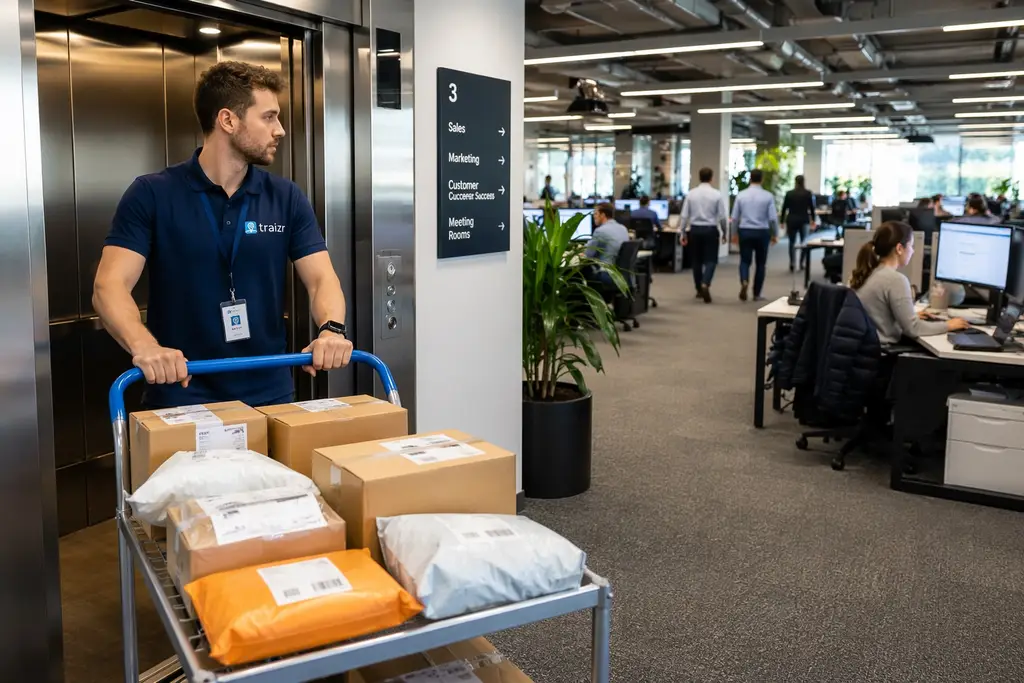
Once a parcel enters the building, it may pass through several stages before reaching its final recipient. It might be received by one person, stored by another, and collected later by someone else entirely. Without a system to track these interactions, the organisation loses sight of the parcel almost immediately.
What It Means to Track Deliveries Internally
Internal delivery tracking is not simply about logging parcels as they arrive. It is about maintaining a continuous record of what happens after that point.
A well-structured process ensures that every delivery is:
- recorded at the moment it is received
- linked to a specific recipient
- assigned to a known location
- tracked until it is collected
This creates a single, consistent view of every parcel within the organisation.
The key difference is continuity. At no point does the parcel fall outside of the process.
Why Informal Processes Don’t Hold Up
In many workplaces, delivery tracking is handled informally.
Reception teams may keep a spreadsheet or a handwritten log. Parcels may be grouped by department or placed on shelves for collection. Notifications are often manual, relying on someone sending an email or making a call.
These approaches can work at low volume, but they are difficult to maintain as demand increases.
When multiple deliveries arrive at once, logging becomes inconsistent. Parcels are moved without being recorded. Items are collected without confirmation. Over time, the process becomes less reliable, even if everyone involved is doing their best to follow it.
The issue is not effort. It is the lack of a system that supports consistent behaviour.
Creating a Trackable Delivery Flow
To track deliveries effectively, the process needs to be both simple and structured.
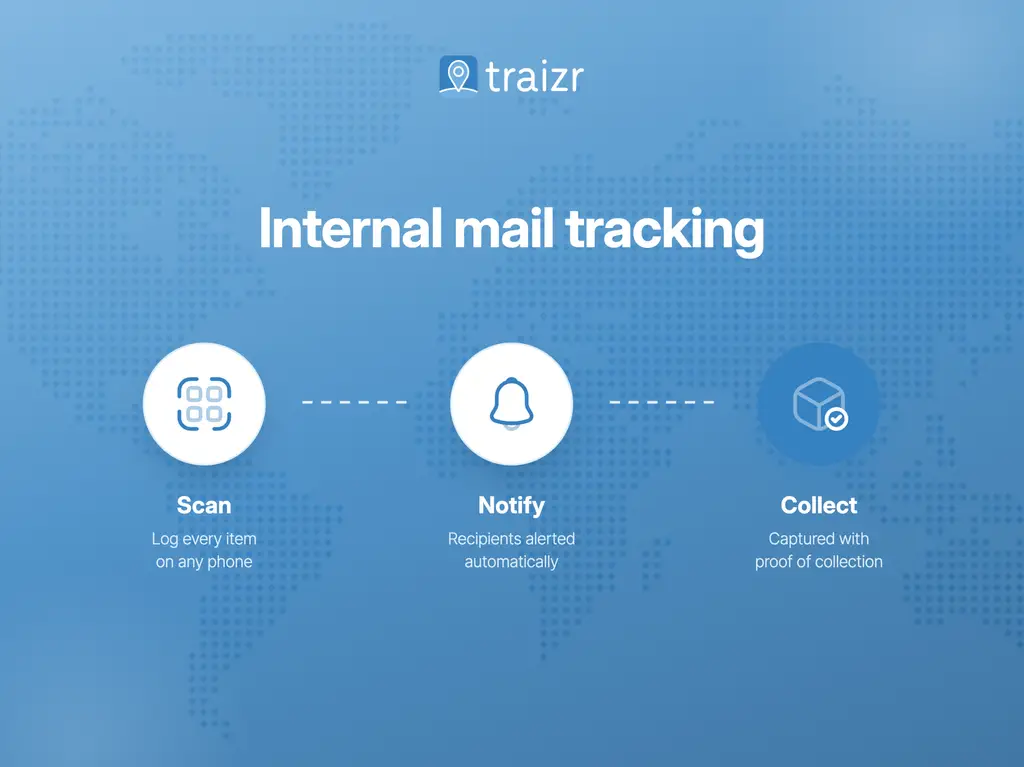
It starts with capturing accurate information at the point of arrival. Scanning a parcel creates an immediate record without slowing down intake. This ensures that nothing enters the building without being logged.
From there, the system maintains visibility. Parcels are associated with recipients, stored in defined locations, and tracked as they move. Notifications are handled automatically, reducing the need for manual communication.
When a parcel is collected, that handover is recorded, completing the chain.
This type of workflow is typically supported by an internal delivery tracking system, which ensures that each step happens consistently.
The Impact on Day-to-Day Operations
When deliveries are tracked properly, the effect on the wider organisation is immediate.
Reception teams are no longer interrupted repeatedly because staff can check the status of their parcels themselves. Deliveries are processed more quickly because scanning replaces manual entry. Parcels are less likely to sit uncollected because notifications are sent automatically.
Most importantly, uncertainty is removed. If a parcel is queried, there is a clear record showing exactly what has happened to it.
This level of clarity changes the way delivery handling is perceived. It moves from being a source of friction to a controlled, predictable process.
Tracking as a Foundation for Accountability
One of the most important aspects of internal delivery tracking is accountability.
When every interaction with a parcel is recorded, it becomes clear who has handled it and when. This does not create additional work. It creates confidence in the process.
Disputes are resolved quickly because there is evidence to refer to. Responsibility is clear without the need for investigation. Staff are more comfortable relying on the system because it consistently reflects what is happening in reality.
Why Delivery Volumes Are Driving Change
The need for internal tracking has grown alongside the increase in delivery volumes.
More organisations are receiving direct shipments, more staff are ordering items individually, and more operations depend on timely delivery of goods. What was once a manageable flow has become a constant stream.
Without a structured approach, this increase in volume puts pressure on every part of the process. Delays become more frequent. Errors become more likely. Resolving issues takes longer because there is more activity to work through.
A system that provides visibility at scale is no longer a luxury. It is a necessary part of maintaining control.
Bringing Delivery Tracking Under Control
Tracking deliveries inside an organisation is ultimately about removing uncertainty.
Once every parcel is visible from arrival to collection, the process becomes easier to manage. Staff know where items are. Reception teams have accurate information at hand. Issues can be resolved quickly because there is a clear record.
See Delivery Tracking in Action
If your current approach relies on manual logs or informal handling, the limitations will already be clear. As volume increases, those limitations become harder to manage.
A structured system changes that dynamic immediately.
Request a demo to see how delivery tracking works when it is handled as a complete, continuous process.