
What return actually means here
Working out the return on mailroom software is less mysterious than it sounds. On one side are the costs of handling deliveries by hand, most of them hidden in staff time and the occasional expensive mistake. On the other are the savings once the process runs itself. You do not need a spreadsheet with forty rows. You need an honest look at a handful of numbers.
The hidden cost of doing it by hand
Manual handling costs more than it appears because the time is spread thin. A minute logging an item, a few more finding it later, an interruption every time someone asks whether their parcel has arrived, and the occasional half-hour hunt for something mislaid. None of it feels significant on its own. Added across a year, it is a real slice of someone's job.
A simple way to estimate it
Try this. Take the number of items your site handles a day, and the rough time each one takes to log, find and hand over by hand. Say a building takes eighty items a day at two minutes each. That is over two and a half hours daily, most of a working day every week, spent on deliveries alone. Now add the cost of the items that go missing, and the goodwill lost when they do. The figure adds up quickly, and it is only the part you can see.
The savings side
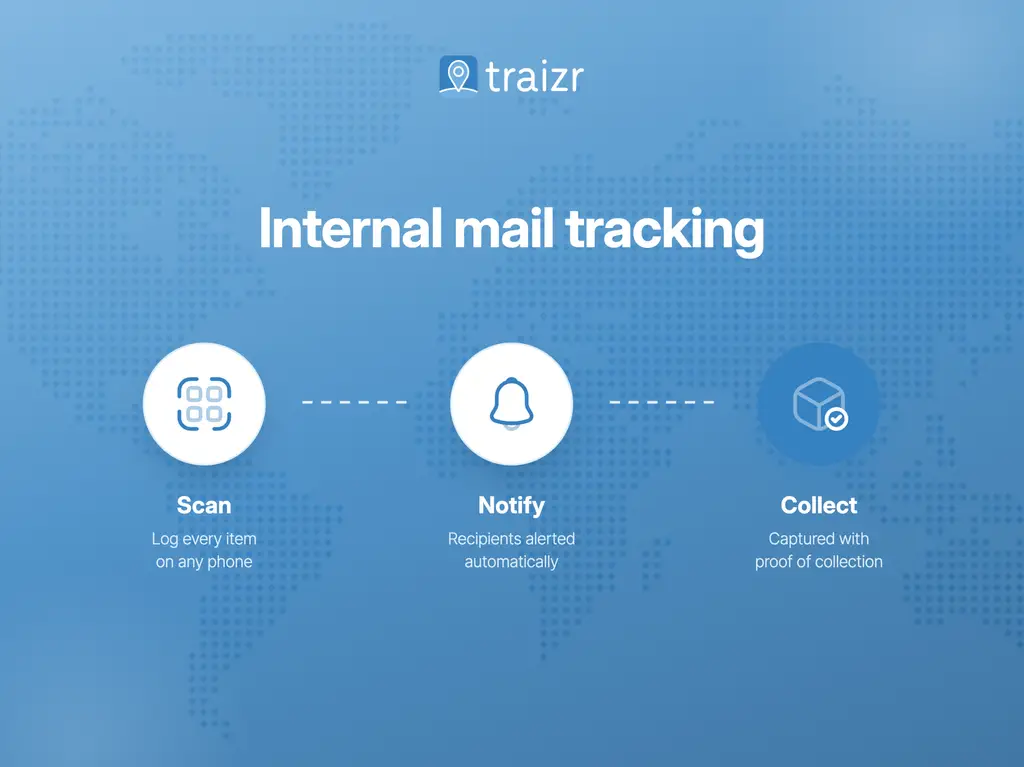
A scan-and-notify process collapses most of that time. Logging drops to seconds, recipients collect without being chased, and lost items become rare because everything is recorded. The interruptions fall away because people are told automatically. You are not just saving minutes, you are handing a chunk of the working week back to the front desk. Clear reporting then shows the volumes so you can see the effect.
Work out your own number
Every building is different, so the honest way to size the return is against your own volumes. If you would like help putting real numbers to it, and to see what mailroom software would change in your case, get in touch and we will walk through it with you.