
Package room
Package Room Software for Staffed and Self-Service Rooms
Package room software records where every parcel is shelved, notifies the recipient and confirms collection, so items can always be found.
- Every item has a location
- Recipients notified automatically
- Collection recorded
What a package room is for
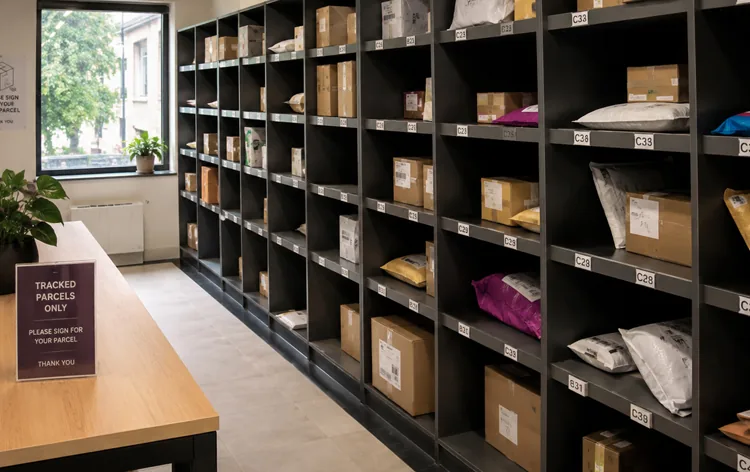
A package room is a dedicated space for holding deliveries until people collect them, in an office, a residential block or on a campus. It keeps parcels out of corridors and off the reception desk.
A room on its own solves storage but not retrieval. Once it holds more than a few dozen parcels, finding a specific one depends on whoever shelved it remembering where it went. Package room software replaces that memory with a record.
The software holds two facts about every item in the room: whose it is, and where it is shelved. With those recorded, any parcel can be found by anyone on the team, and recipients can be notified and chased automatically.
How items move through the room
Five steps, from delivery to a freed shelf location.
- Delivered to the roomA courier delivers a batch of parcels to the room.
- Logged with a locationEach item is logged with the shelf or bay it is placed on.
- The recipient is notifiedA notification is sent automatically as soon as the item is shelved.
- CollectedThe collection is recorded with a signature or photograph.
- The location is freedThe shelf or bay is marked available again, so capacity stays accurate.
Recording the shelf location is the important step. "It is in the room" is not a useful answer when the room holds four hundred items.
Staffed or self-service
Both models work. Both rest on the same thing underneath, and self-service rests on it harder.
Some package rooms are run by staff who hand items over. Others let people collect for themselves, sometimes with lockers. Traizr supports both.
Both depend on an accurate record of what is in the room and who it belongs to. Without one, a staffed room becomes a bottleneck, because collection moves at the speed of one person searching the shelves.
Self-service rooms depend on the record even more. If the location on the notification is wrong, the resident is standing at the wrong shelf with nobody to ask, so accurate locations are what make self-service collection work.
Lockers are one way of running self-service, but they are expensive and fixed in size. Shelves and bays with recorded locations cost far less and handle uneven deliveries better. Where lockers already exist, they are simply another set of locations in the system.
Keeping the room from filling up
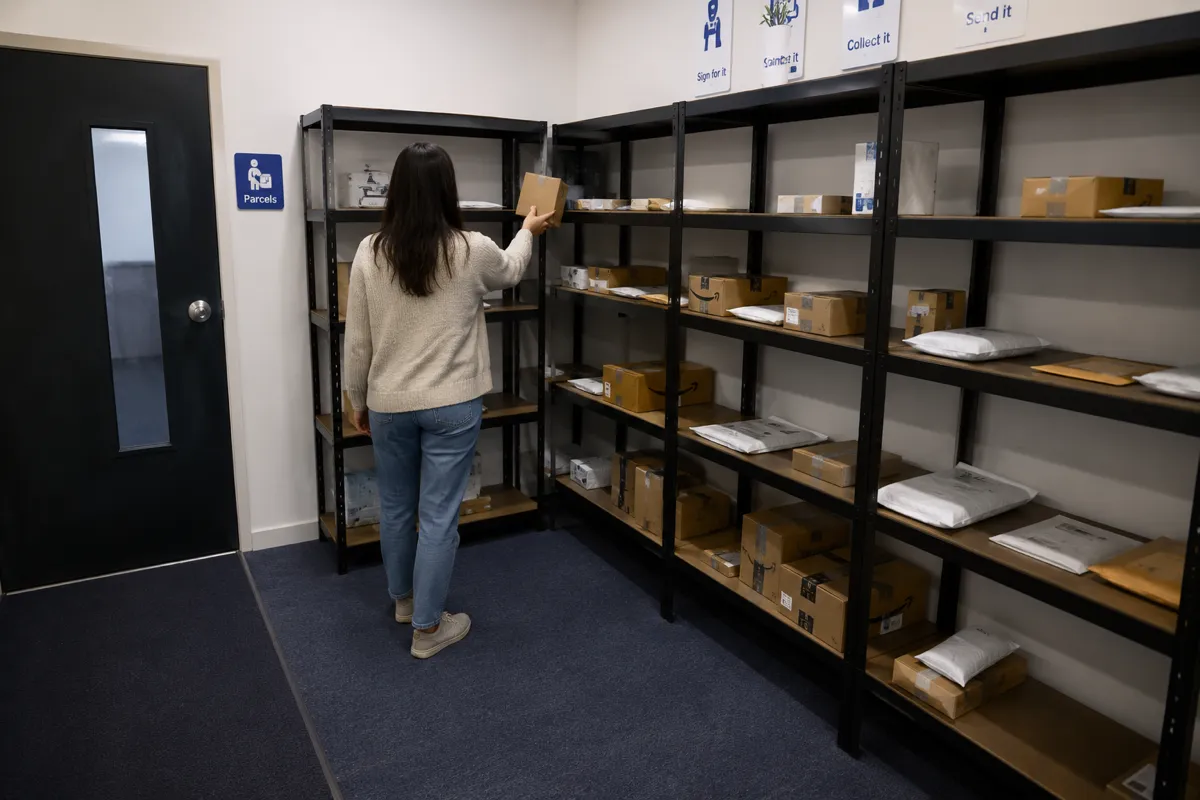
Uncollected parcels are what fill a package room. These are the measured numbers, and what the software does about them.
-
62% still there after four hours
Measured across 224,604 parcels: four hours after arrival, most items are still waiting on the shelf.
-
98.4% eventually collected
From the same sample. Items are rarely abandoned, so reminders work.
-
Reminders speed up collection
Automatic reminders go to anyone who has not collected, which shortens waiting times.
-
Faster turnover, less shelving
A room that empties quickly needs far less space than one where parcels sit for days.
-
Waiting items visible
Reporting shows what has been in the room longest, so overflow can be seen coming.
-
Locations freed at collection
Collection marks the shelf or bay available again, so capacity stays accurate.
How much space you need
Package rooms are usually sized against average volume, and then overflow at every peak. The number that matters is peak volume multiplied by how long items wait, because that is what is physically in the room at the busiest moment.
Shelving is not the only answer. Halving how long items wait frees as much space as doubling the shelving, and reminders are much cheaper than floor space. For a room that is already tight, chasing collections is the quickest fix.
Arrival patterns matter too, because deliveries are not spread evenly through the day. Our parcel data report shows what those patterns look like across a large measured sample.
Where the room ends
Package room software covers holding and collecting items. Three related jobs are covered elsewhere.
Items that move on rather than being collected. If a parcel leaves the room on its way to another floor, building or site, each handover needs recording. That is internal package tracking software.
The building's whole intake, not just the room. If the question is every delivery into the site rather than the contents of one space, the digital mailroom covers the concept and mailroom management software is the buyer's page.
Post for people who are not in the building. A package room assumes someone will come for the item. Where they will not, the recipient chooses what happens to it remotely, which is virtual office software.
For the building types that run rooms like this most often, see apartment package management, student accommodation and concierge parcel software.
Frequently asked questions
Everything you need to know before getting in touch.
What is package room software?
Package room software keeps the record of what is in the room and who each item belongs to. Every item is logged on arrival with its shelf location, the recipient is notified, and a signature or photograph is captured at collection.
Does it work for a self-service room as well as a staffed one?
Yes. Both models depend on an accurate record of items and locations. In a self-service room the recorded location is what tells the resident which shelf to go to.
Do we need lockers?
No. Shelves and bays with recorded locations do the same job at a fraction of the cost, and handle uneven deliveries better. Where lockers already exist, they are simply another set of locations in the system.
How does it stop the room filling up?
By chasing uncollected items automatically. Across 224,604 parcels we measured, 62% are still in the room four hours after arrival, and 98.4% are eventually collected. Reminders shorten the time items wait, and a room that empties quickly needs far less space. See the parcel data report.
What is dwell time and why does it matter?
Dwell time is how long an item waits between arriving and being collected. It matters because it decides how much shelving you need: a room holding two days of deliveries needs twice the space of one holding a single day, for the same volume.
How much space do we actually need?
Size the room against peak volume multiplied by how long items wait, not against an average day. The arrival patterns in our parcel data report are a useful starting point.
What happens when the room is full?
Reporting shows what is ageing and what is due, so a full room can be seen coming. Whether you use an overflow area or chase collections harder is your decision, but the software gives you the warning early.
Can residents or staff collect outside office hours?
That depends on your building access rather than on the software. Where out-of-hours collection is allowed, the collection is still recorded at the point it happens.
How do we prove an item was handed over?
A signature or photograph is captured at collection and stored on the item, so the record shows who took it and when.
Can one system cover several package rooms?
Yes. Several rooms across several buildings report together, with each item recorded against the room and location it is actually in.
What about items that leave the room and go somewhere else?
If an item is passed onward rather than collected, each handover needs recording. Internal package tracking software covers that.
What hardware do we need in the room?
A phone or tablet. Items are logged with the camera, so there is no fixed terminal to install. Some sites add a label printer for location tags, but it is not required.
Related Traizr software pages
Same platform, different starting point. Pick the one closest to what you are trying to solve.
-
Mailroom management software
What the software has to do, what to ask a vendor, and how Traizr compares. The page to start on if you are buying.
Read the page -
Internal package tracking software
Follow an item through every hop inside your buildings, with a scan at each handover and a record of who held it.
Read the page -
Digital mailroom
What a digital mailroom is, how to set one up, and how to measure whether it is working.
Read the page
Ready to Simplify Your Building?
We will show you how items are logged to locations, how recipients are notified and how collection is recorded. About 20 minutes.