Why offices track parcels at all
There was a time when very little arrived at an office beyond the post. That has changed. Staff order to work because it is convenient, suppliers deliver equipment and samples, and the daily flow of parcels through a modern office is nothing like it was a decade ago. Once the volume passes a certain point, tracking stops being optional.
Personal deliveries at work
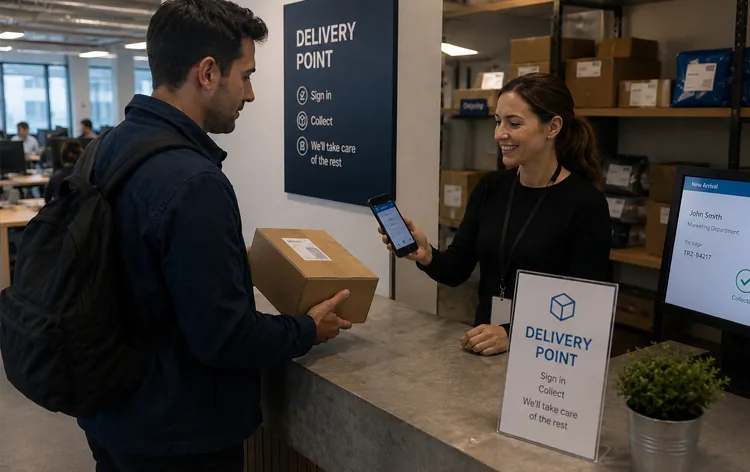
A good share of what arrives at an office is personal, and that is fine, but it needs handling. People expect to be told when their parcel is in and to collect it without fuss. Logging each item to the right person and notifying them keeps personal deliveries from becoming a pile that someone has to sort by guesswork.
The desk-drop problem
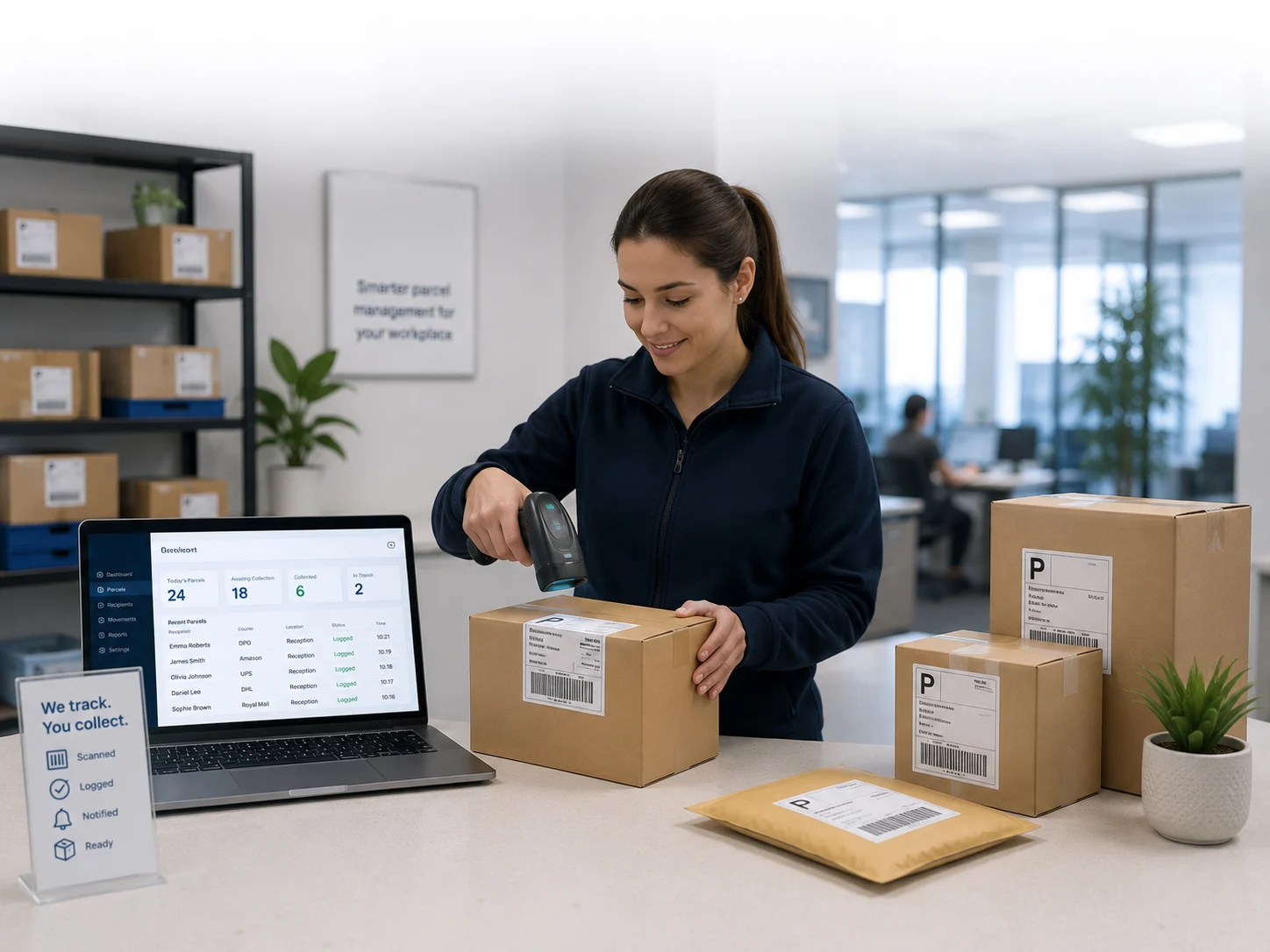
The informal fix, leaving parcels on desks or by reception, breaks down quickly. Items get taken by the wrong person, forgotten under a coat, or left for someone who is working from home that day. A quick scan on arrival and a notification means the parcel waits in a known place with a record attached, rather than wandering the office.
Tracking simple enough to stick
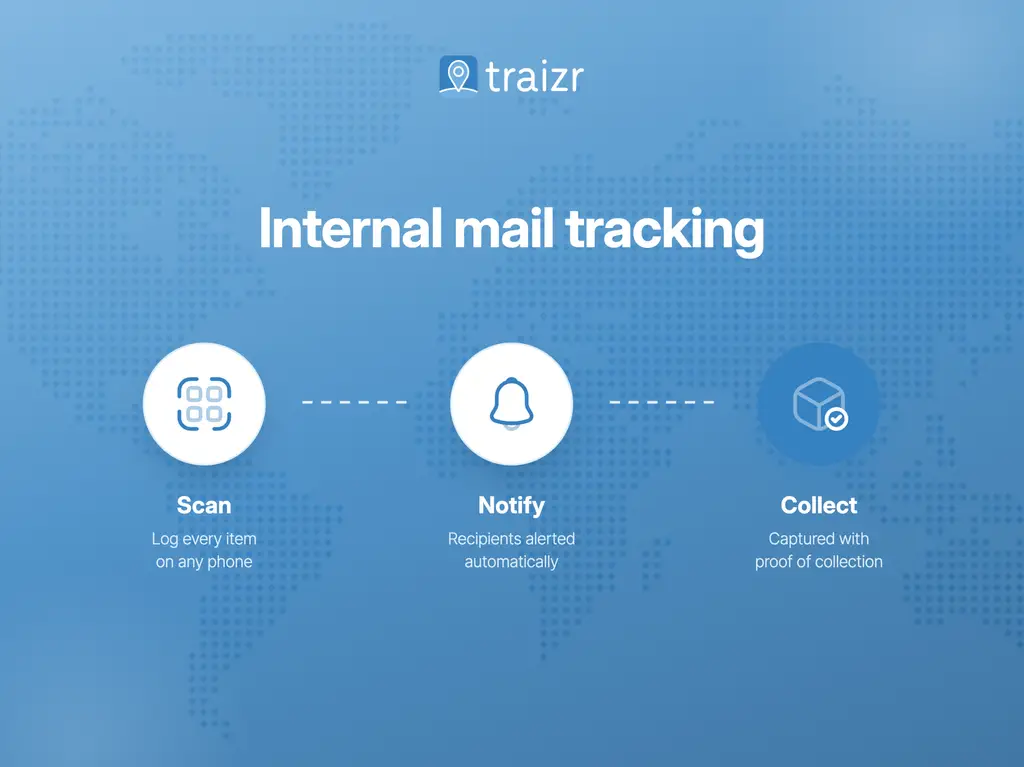
Office parcel tracking only works if it is easy, because the moment it is a chore it gets skipped. A phone scan that takes a couple of seconds is the sort of thing a busy team will actually keep doing. Our guide to managing incoming parcels in the office covers what that looks like in practice.
Keep office deliveries in order
Traizr tracks office parcels with a system built to be quick, and it is the reliable way to stop packages going missing at work. To see it in your office, book a demo.