
Documents are not just parcels
A physical document moving through a building carries a different kind of weight from a parcel. A signed contract, a set of personnel records, a legal bundle, a board pack: losing one is not an inconvenience, it is a problem with consequences. Tracking documents is really about tracking responsibility, which is why the record needs to be more careful than a shelf and a note.
Confidentiality comes first
Many of the documents worth tracking are also sensitive. Knowing who held an item is part of keeping it confidential, because the two questions are the same one seen from different angles. A system that records each handover and controls who can see the record supports confidentiality rather than working against it.
The trail that matters
For documents, the value is in the unbroken trail: received, held, moved, collected, each step named and timed. That continuity is what lets you show a document was handled properly from start to finish. It feeds directly into a chain of custody and a full proof of delivery record. The Information Commissioner's Office guidance on handling personal data applies just as much to paper as to screens.
Where it matters most
Document tracking earns its keep in legal, financial, HR and public-sector settings, anywhere the handling of paper can be questioned later. Firms that treat their postroom as part of their obligations already work this way, and the same discipline suits any team holding sensitive records.
Keep a clean record
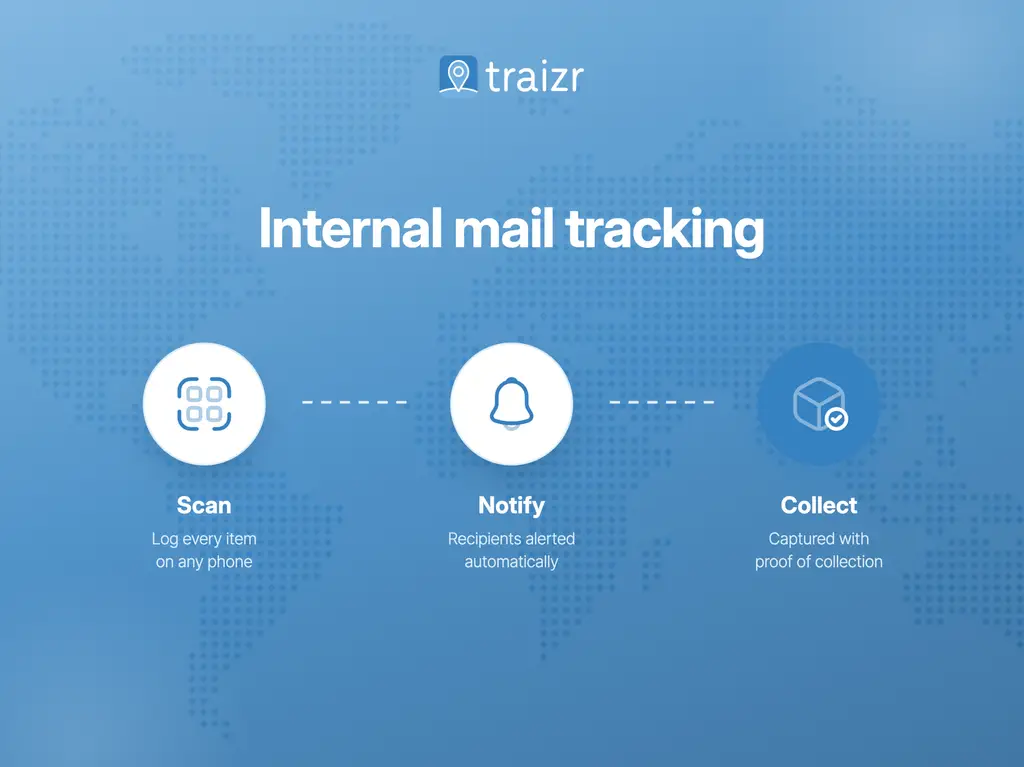
Traizr tracks documents with the same scan that works for parcels, feeding a full compliance trail. To see how it would handle your sensitive paperwork, book a demo.